Clara Luzian’s work unfolds across both digital and physical exhibition contexts, operating as a continuous system rather than separate mediums. Her practice inhabits large-scale LED architectures, immersive public infrastructures and institutional gallery spaces, exploring how digital form can coexist with — and extend into — sculptural presence. Each exhibition becomes a spatial translation of the same evolving morphology.
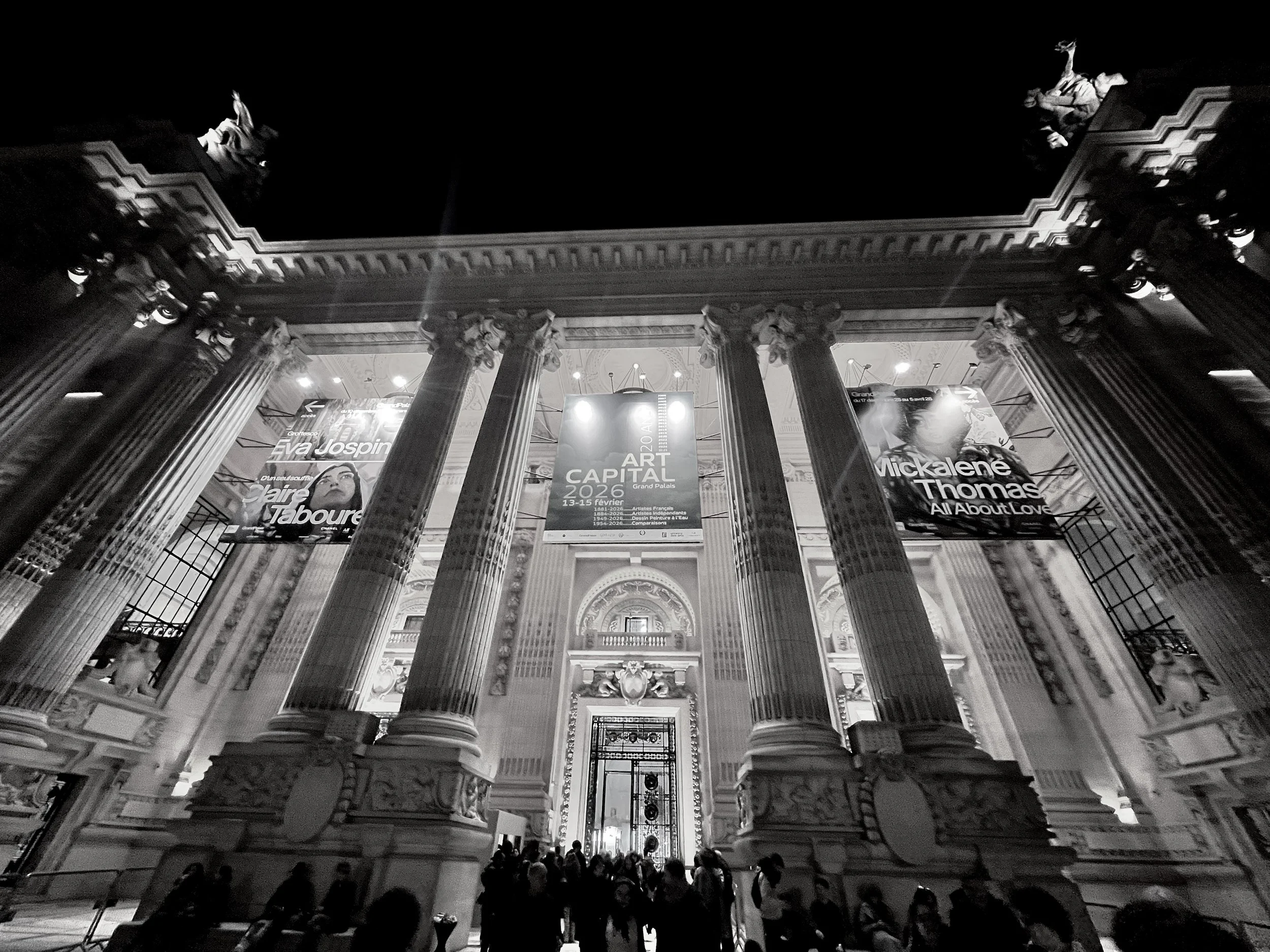
Art Capital - Grand Palais, Paris (2026)
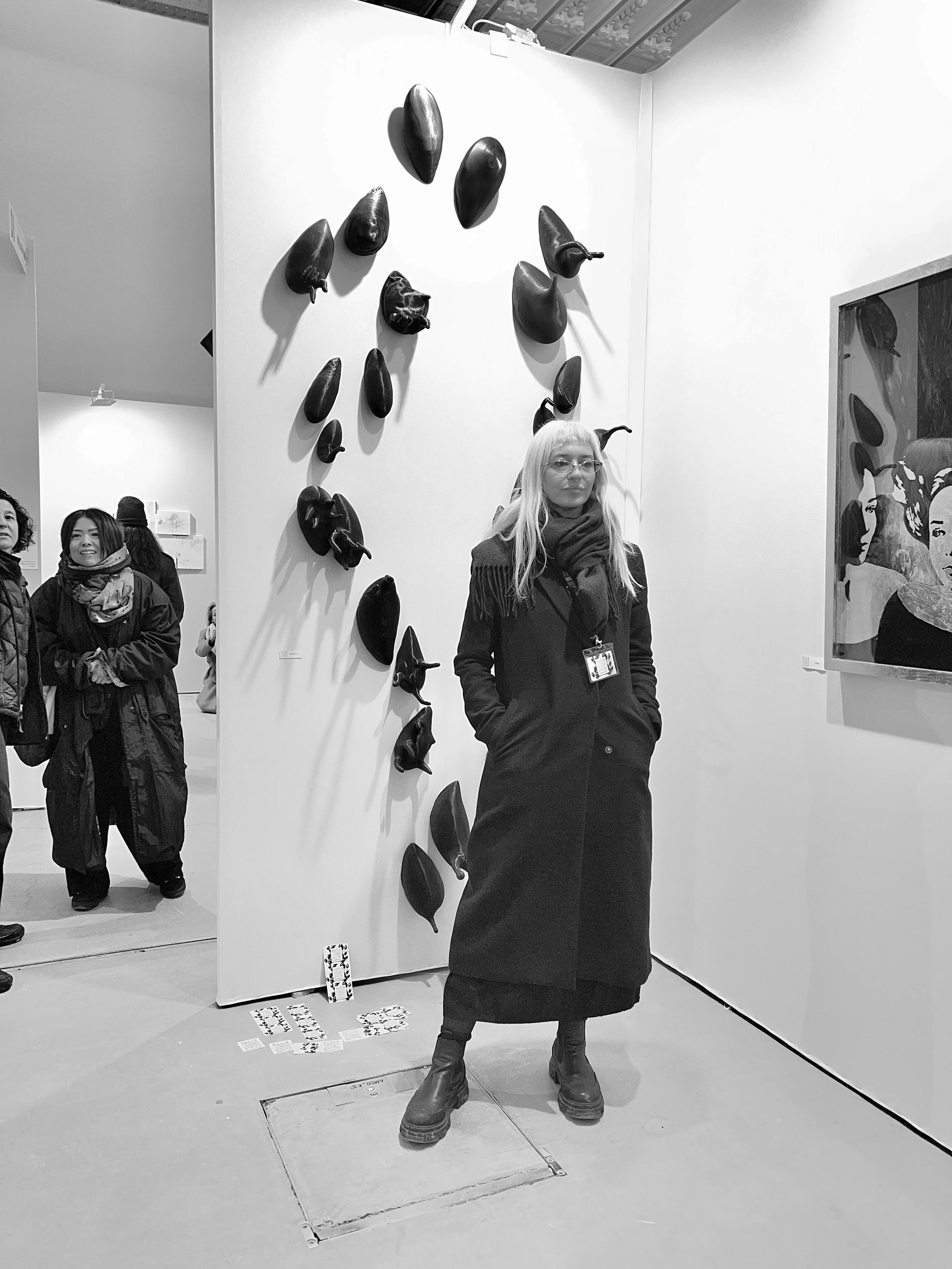
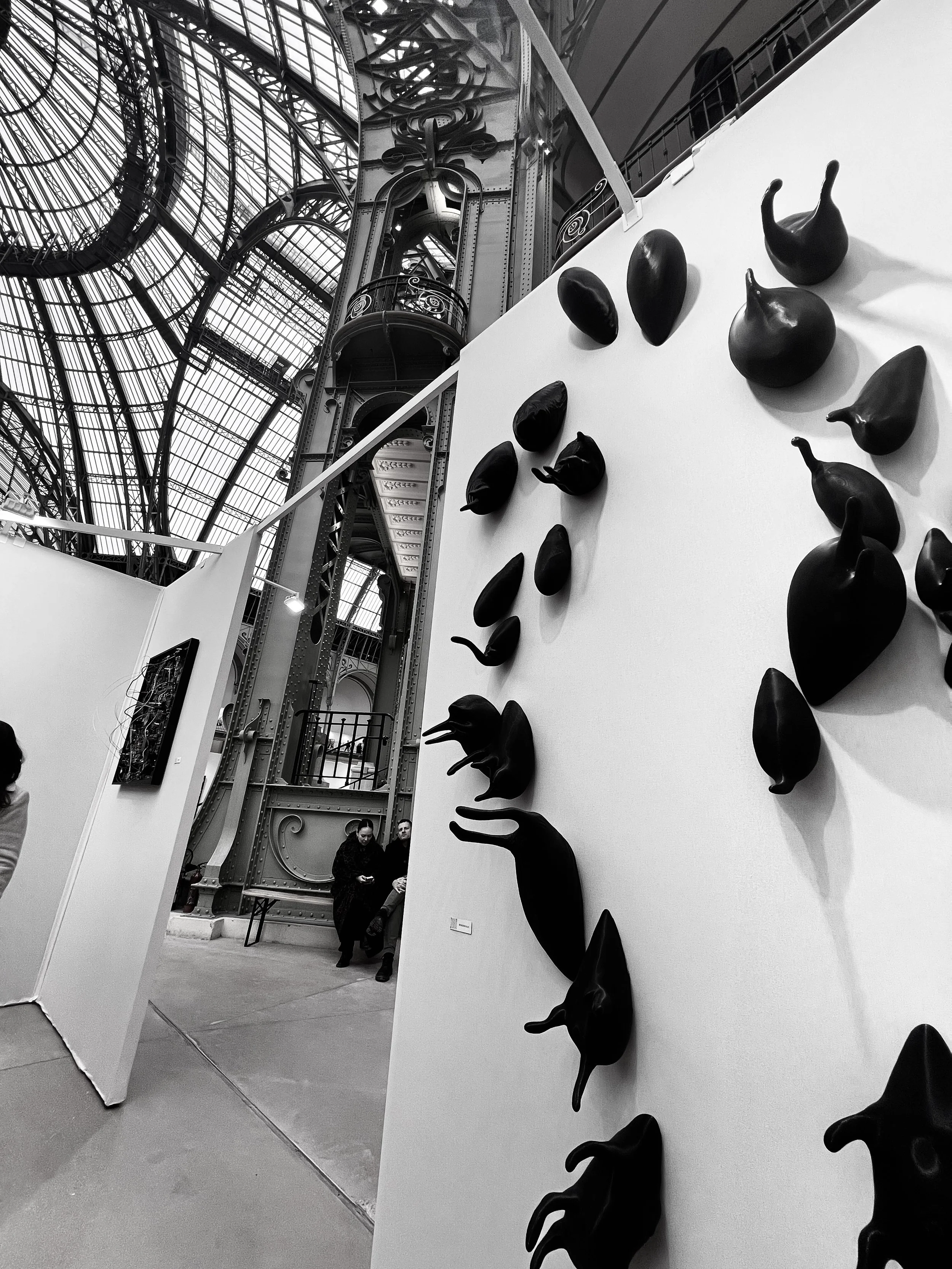
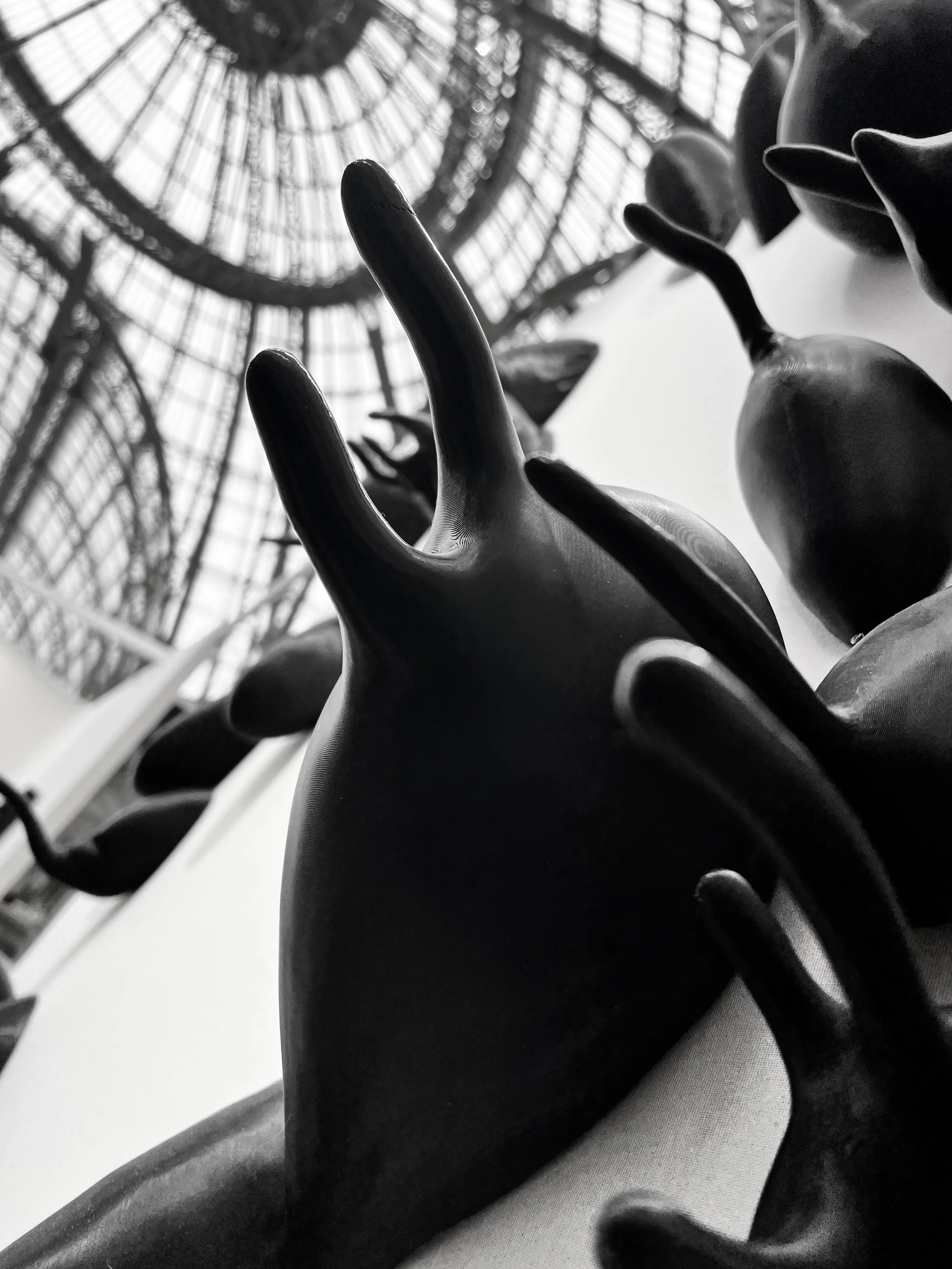
Collective Drift was presented at Art Capital within the Grand Palais as a 29-module sculptural system, marking a decisive shift in the evolution of the work from digital morphology to physical architecture.
Rather than translating a digital object into static form, the installation preserves its algorithmic logic — each module functioning as part of a larger spatial organism. The work inhabits the historic architecture of the Grand Palais while retaining the immersive continuity of its digital origin, establishing a dialogue between projection, material density and modular expansion.
This exhibition marks the first institutional presentation of the system in physical form, positioning the sculpture not as a derivative of the digital, but as its structural counterpart.
This form emerged through an archaeological process of the unconscious, uncovered.
The digital state exists as a weightless, oniric condition.
The physical sculpture is its temporary incarnation: material, fragile, and bounded to the laws of the Earth.Neither version documents the other.
They are the same form, occupying different spaces.
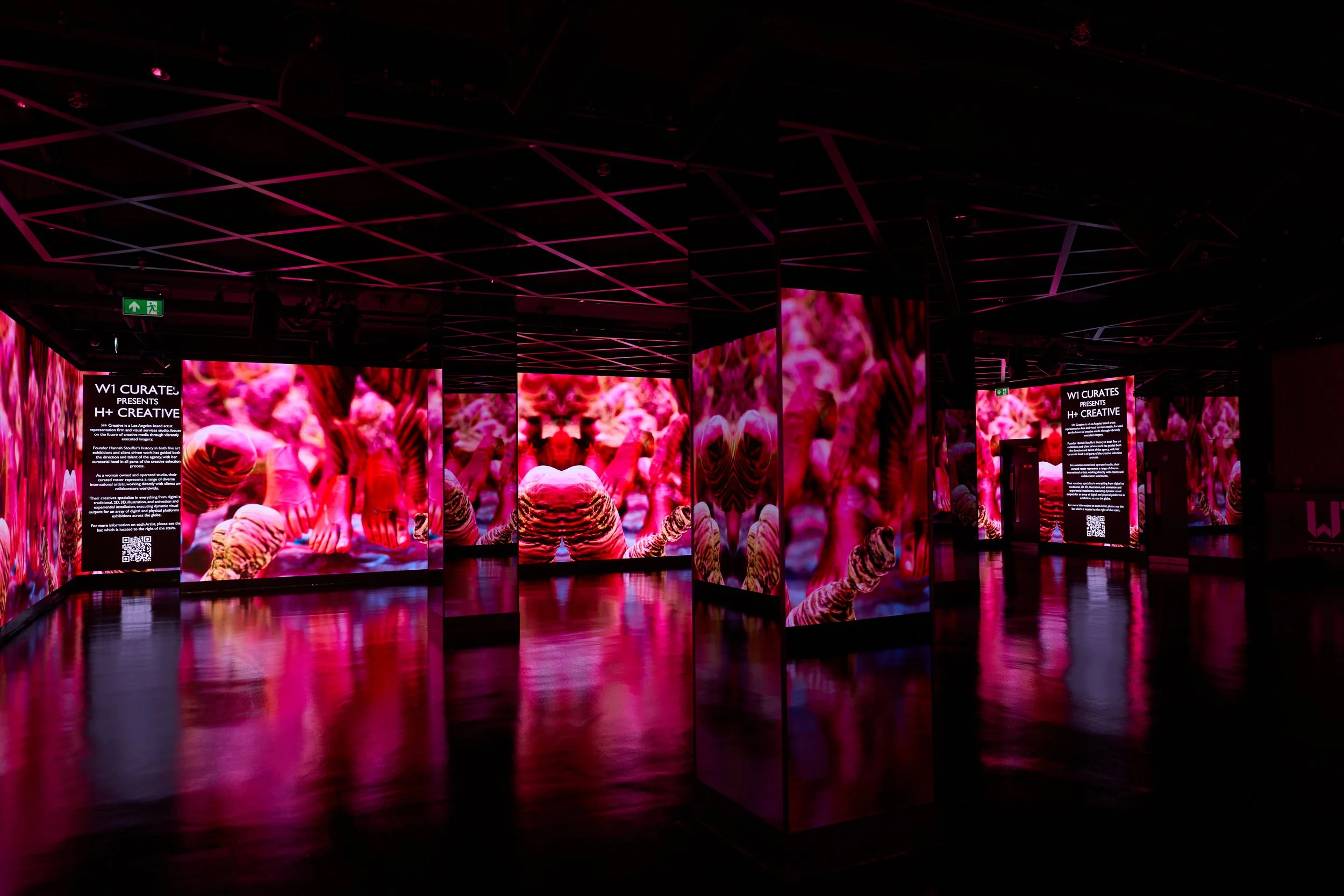
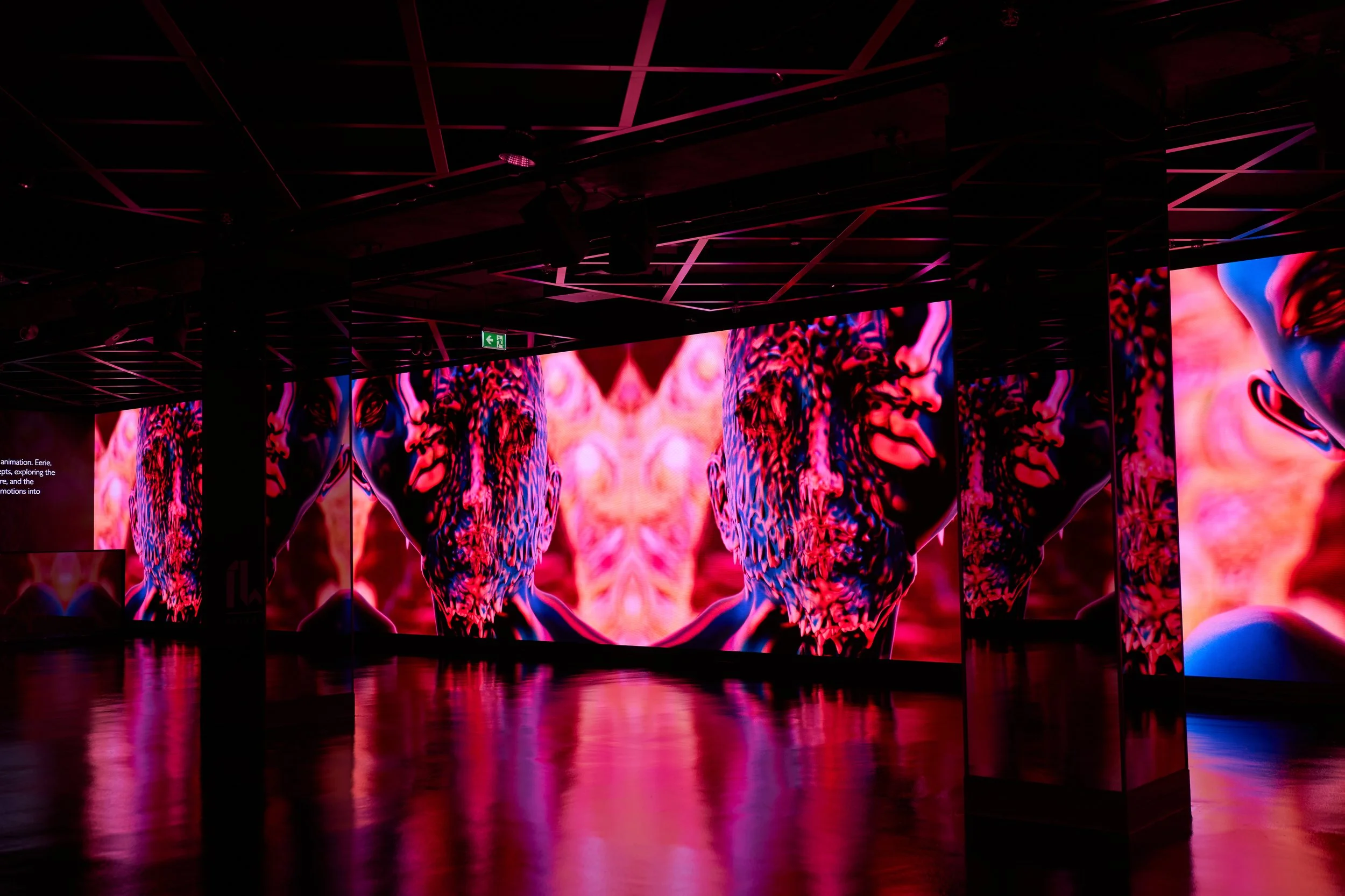
W1 Curates - “REVERIE”, London (2026)
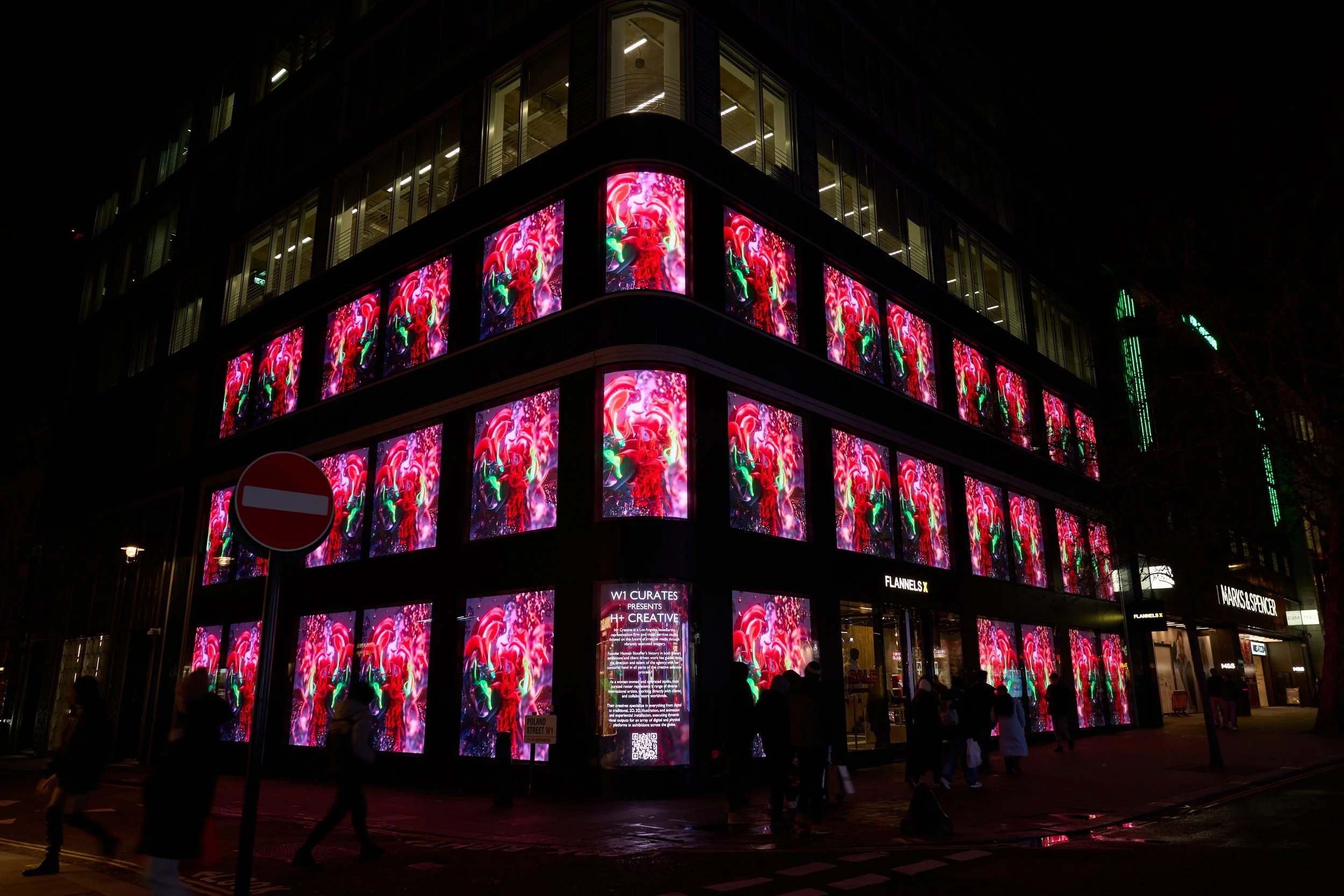
Presented as part of REVERIE, an H+ Creative exhibition celebrating ten years of international digital practice, the work occupied W1’s monumental LED façades in the heart of London’s Oxford Street.
Installed across 24/7 large-format urban displays, the piece operated within a public architectural context — not as advertising surface, but as a temporary digital environment interrupting the city’s commercial rhythm. Within this framework, the morphology unfolded at metropolitan scale, interacting with pedestrian flow, nocturnal light, and the saturated visual ecology of central London.
Rather than existing as a singular projection, the work became part of a curated collective statement on contemporary digital art as an evolving ecosystem. The urban façade functioned as a porous threshold between internal visual landscapes and the density of public space.
If The Sphere represents immersion through technological enclosure, W1 situates the same system within open urban circulation — exposed, continuous, and integrated into the city’s visual bloodstream.
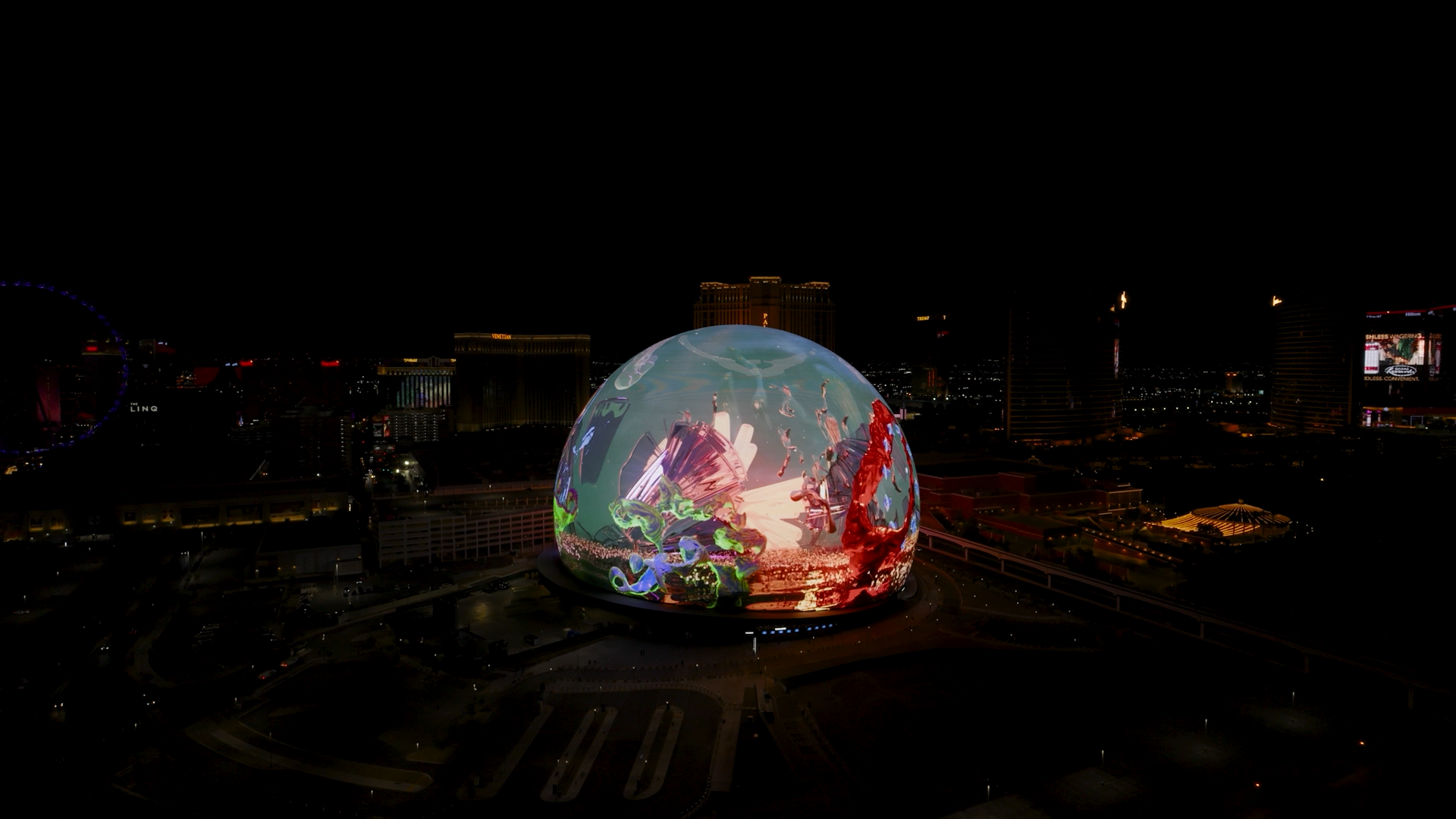
The Sphere - Las Vegas (2024)
At The Sphere in Las Vegas, the work was presented within one of the most advanced immersive display architectures in the world — a fully curved, ultra-high-resolution LED environment operating at architectural scale.
Rather than functioning as projected imagery, the piece was conceived as a spatial continuum, expanding across the spherical surface as a living digital skin. The morphology adapted to curvature, resolution and spatial perception, transforming the infrastructure into an inhabitable visual organism.
Here, the digital state exists at monumental scale — weightless yet architectural, immaterial yet structurally present. The form does not sit on the surface; it becomes the surface.
If the sculpture at the Grand Palais anchors the system to gravity, The Sphere represents its atmospheric condition: a planetary-scale manifestation of the same evolving morphology.
Both contexts — physical installation and immersive digital architecture — reveal different states of a single system unfolding across matter and light.

Times Square - New York City (Multiple Exhibitions)
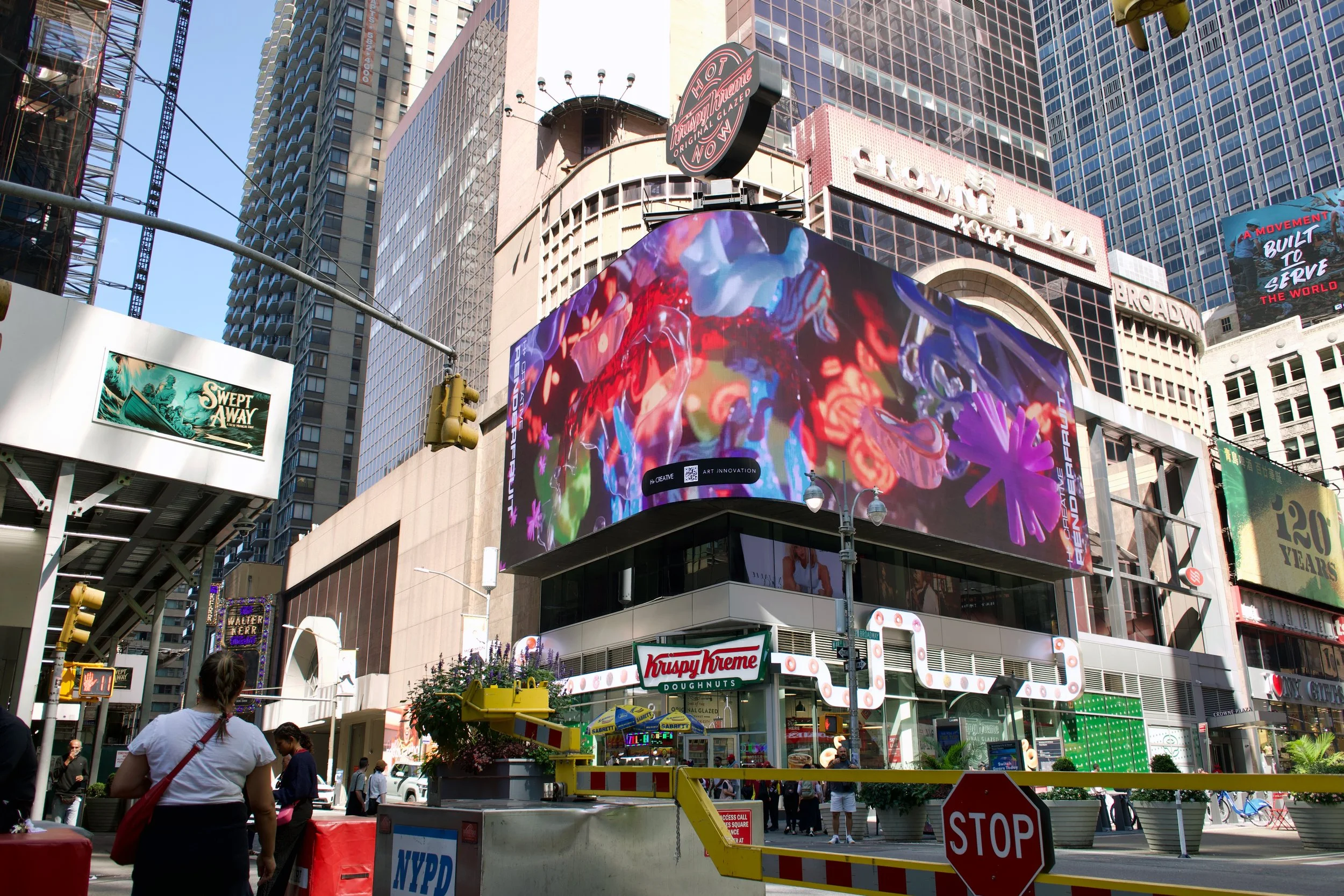
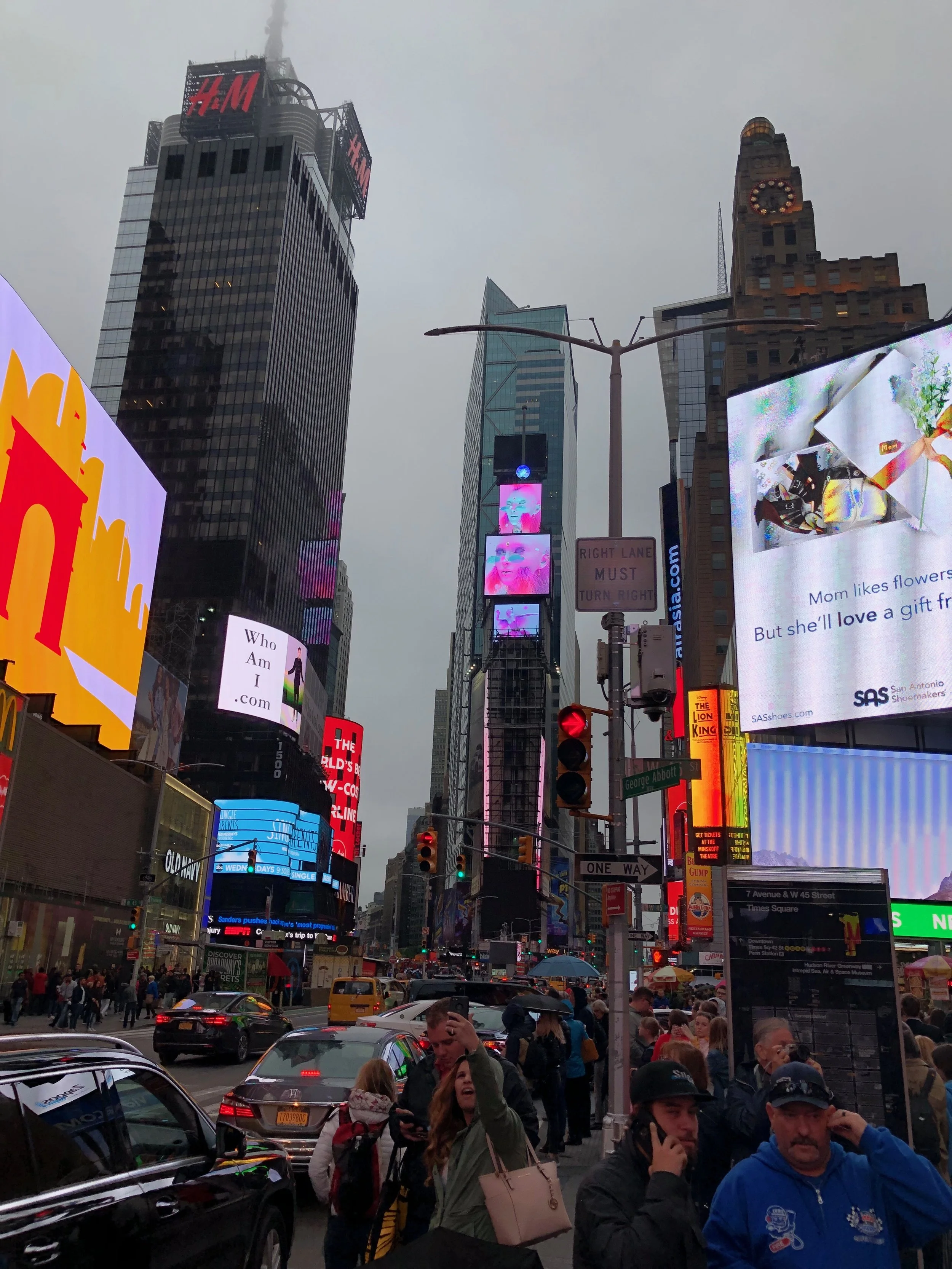
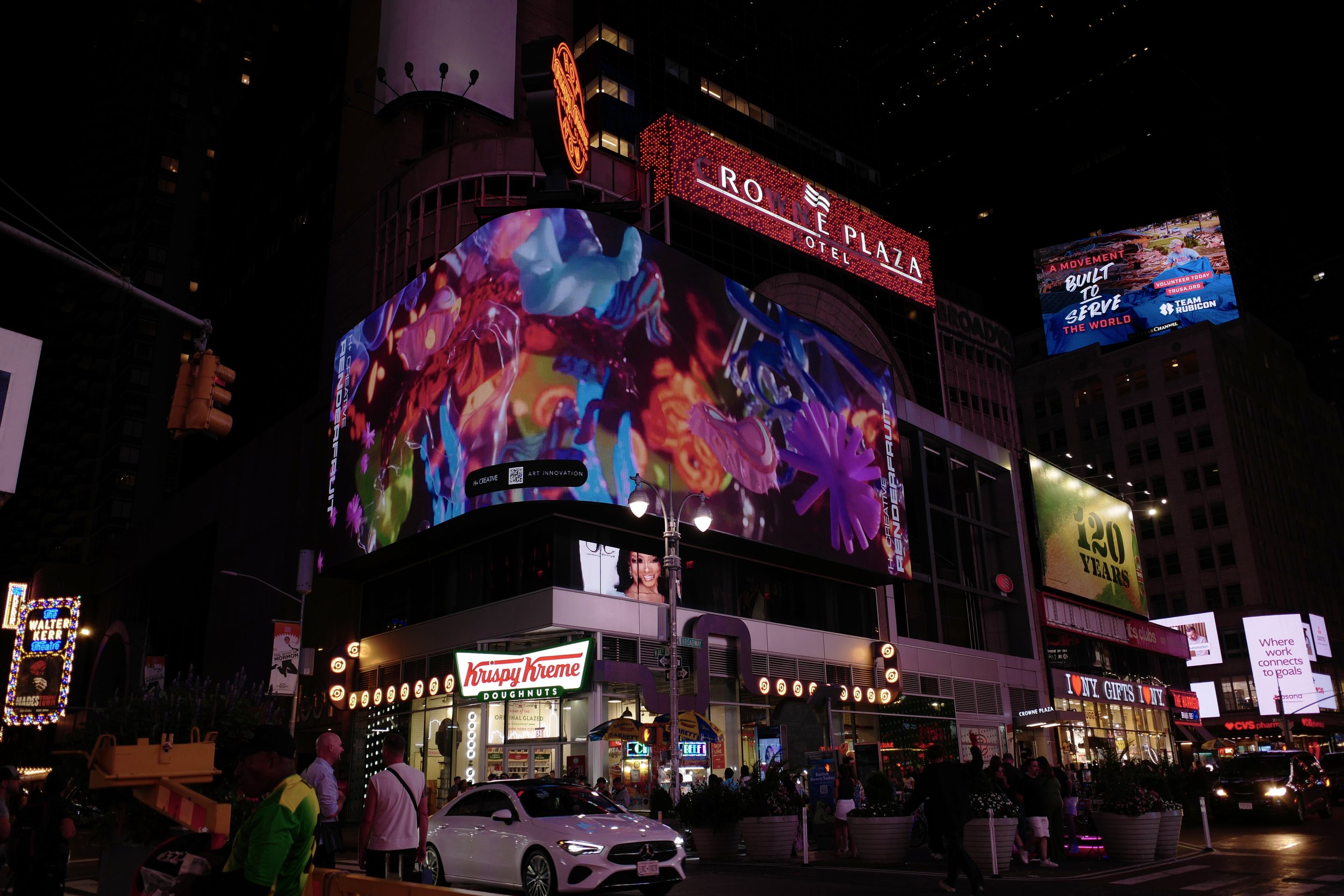
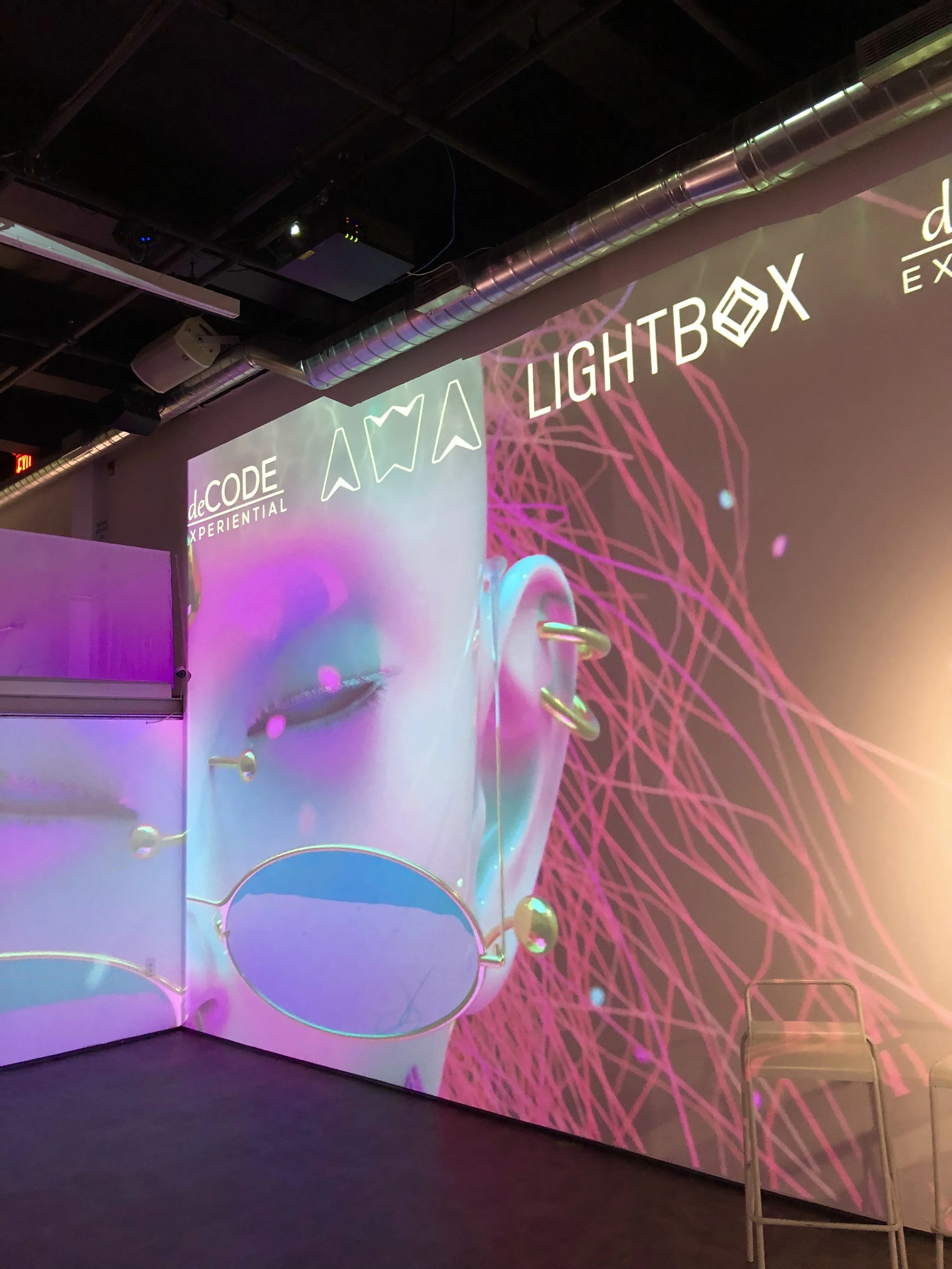
Clara Luzian’s visual systems have been exhibited three times in Times Square, New York City, across major LED façades as part of curated digital art programs including ZAZ10TS and Meta-Morphosis.
The first presentation took place at ZAZ Corner (Broadway & 41st Street), followed by a second exhibition at Broadway & 48th Street, and later at the iconic triple-billboard intersection at One Times Square — one of the most visible public art sites in the world.
Within this hyper-saturated commercial landscape, the pieces were conceived as acts of visual stabilization. Motion was structured to assert hierarchy and coherence amid distraction, speed, and constant sensory competition. Scale, rhythm and spatial sequencing were calibrated for multi-screen environments where attention lasts seconds rather than minutes.
In this context, digital form operates as public sculpture embedded within the city’s circulatory system — exposed to movement, noise and unpredictability, yet maintaining structural clarity. The intervention does not retreat from intensity; it engages it directly, using motion as a framework for perceptual order within urban flux.